ServicesWindow Installation
Window Installation in Seal Beach
We install windows in new and reworked openings: additions, remodels, enlarged walls and full-frame tear-outs. We set each unit on a sloped sill pan, lap the flashing in the right order and choose frames that hold up to salt air, so the window works for decades.
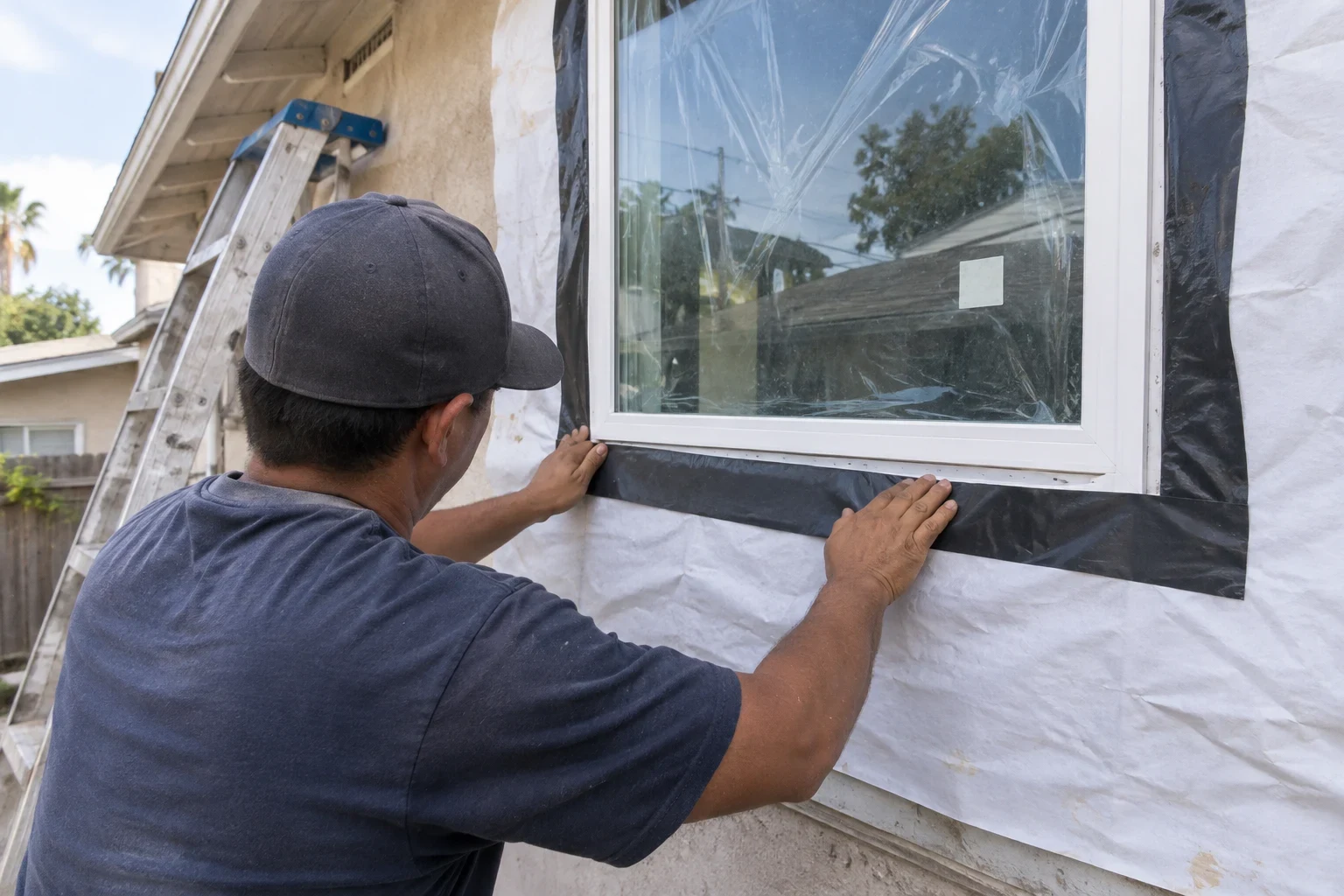
When installation is the right job
Window installation means building or rebuilding the opening itself, not just swapping glass into an old frame. It fits when you are adding a room, cutting a new opening, making a window wider or taller, or when the old frame has rotted and has to come out down to the studs. If your existing frames are sound and you only want new units in them, our Window Retrofitting page covers that lighter approach.
Most early window failures we see come from the opening, not the glass. Flashing laps backward, a sill pan was never installed, or there is no gap left for the frame to move. Water then finds the framing behind the stucco. Getting those layers right costs a little more on day one and saves a wall repair later. We have 30 years of window installation experience, and that is where most of it gets spent.
What the work includes
- Opening layout and framing
- We confirm the rough opening size, check that the header is sized for the span and that the opening is square and plumb. On new or enlarged openings we frame in a proper header and jack studs.
- Sill pan and flashing
- Before the window is set, we install a sill pan pitched toward the outside, so any moisture that slips past the frame is carried out of the wall. Flashing tape goes on in overlapping order, sill first, then sides, then head, so each layer drains onto the one below it.
- Nail-fin or full-frame setting
- We set the unit, shim it level and square, and fasten it with corrosion-resistant fasteners. Near the coast, plain steel screws rust and stain the stucco within a few years.
- Insulation and sealing
- The gap between frame and stud gets low-expansion foam that will not bow the frame. Exterior joints get a sealant that stays flexible as the frame expands and contracts.
- Stucco and trim finish
- We patch stucco or siding around the new opening and fit interior trim so the window looks like it has always been there.
- Product choice and cleanup
- We are an authorized Crystal Pacific Windows installer, so at the estimate we lay out the frame and glass choices that suit each opening and explain how they differ in price and upkeep. When we finish, debris is hauled off and the floors are swept.
Signs you need a full installation
Soft or stained framing
If wood around the old window crumbles under a screwdriver, a retrofit insert would be fastened to rot. The frame has to come out.
Water stains below the sill
Streaks on drywall or bubbling paint under a window usually mean the original install had no sill pan or the flashing was reversed.
You want a bigger or new opening
Wider views, a window in a blank wall or code-required egress in a bedroom all mean cutting and framing a new opening.
An addition or remodel is underway
New walls need new windows set to the current energy code, and it is cheaper to do it while the wall is open.
Frames that bind or rack
A sash that sticks in one corner often points to a settled header or an out-of-square opening that only a rebuild will correct.
How an installation runs
- 1
In-home estimate
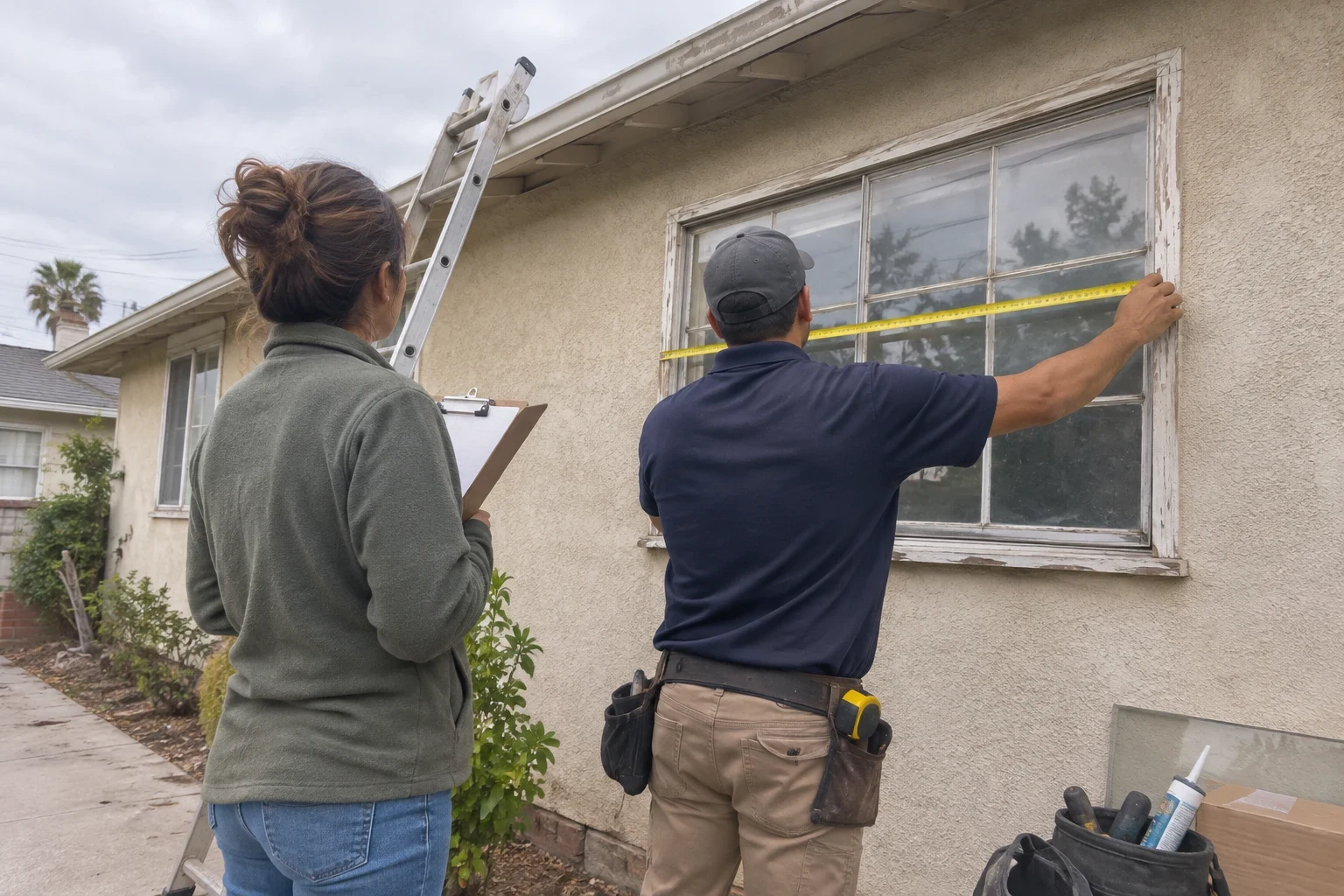
We measure each opening, check the framing and talk through frame materials and glass. You get a written estimate that lists each window and the work around it, with no sales pressure or obligation.
- 2
Permit and ordering
New or resized openings generally need a city permit, and we pull it. Windows are built to the measured size, so we order once the details are signed off.
- 3
Prep and protection
On install day we cover floors and furniture near each opening and set up work areas outside. Old units and damaged framing come out one opening at a time so your home is not left open overnight.
- 4
Set, flash and seal
Sill pan, unit, shims, fasteners, flashing, foam and sealant go in that order. We operate every sash and lock before moving on.
- 5
Finish and walkthrough
Stucco and trim are patched, the site is cleaned and we show you how each window opens and locks. The inspector signs off where a permit was required.
What moves the price
With installation, most of the cost sits in the work around the window rather than in the unit. Cutting stucco, building a header and patching finishes take longer than setting a window into a sound frame. A low-priced frame can turn expensive over the years if it fades, warps or needs resealing, so we weigh lifespan and upkeep next to the price.
- New opening or existing
- A new or enlarged opening adds header framing, stucco cutback and patching. Reusing an existing rough opening keeps labor down.
- Condition of the framing
- Rot or termite damage behind an old frame must be replaced before a new unit goes in. We photograph what we find and show you before adding any work.
- Frame material and glass
- Vinyl, fiberglass and aluminum differ in price, insulation value and how they stand up to salt air and sun. Laminated or low-E glass raises the cost and changes energy and noise performance.
- Unit size and working height
- Oversized picture windows and custom shapes are heavy and awkward, so they take an extra installer to set safely. Openings on a second floor may need scaffolding, which adds setup time.
- Permits and finishes
- Permit fees and the amount of stucco, drywall or trim to rebuild vary by job, and both appear as line items on your estimate.
Window installation questions
Something not covered here? (562) 554-7232
What is the difference between installation and retrofitting?
Retrofitting sets a new window inside your existing frame, which is quicker and disturbs less stucco. Full installation removes the frame down to the studs so we can fix framing, add a sill pan and flash properly. We will tell you which one your openings actually need after we look at them.
Will the city want a permit for a new opening?
In most cases, yes. A new or resized opening changes the wall's structure and the energy figures for your home, so a permit and inspection are generally required. Pulling that permit is part of our job, not something you have to chase.
Which frame material lasts longest near the ocean?
Vinyl and fiberglass do not corrode, so they hold up well in salty air with little more than occasional washing. Aluminum is strong and slim but needs a good finish and stainless hardware to resist pitting. We weigh each option's price against its expected life and upkeep with you.
What happens if something gets damaged during the work?
Our company is bonded and insured. That protection matters on installation jobs, because we cut into exterior walls and work from ladders around your home. If you want the details, ask during your estimate and we will go over them.
How long does installing one window take?
Setting a unit in a prepared opening takes a few hours. A new opening with header framing and stucco patching usually runs longer, and stucco needs time to cure before final paint. We give you the schedule in the estimate.
Can a new window match the ones I already have?
Usually it can come close. We match frame color, sightlines and grid pattern where the product line allows, and we will tell you up front if an exact match is not possible. Sometimes replacing a neighboring window at the same time gives a more consistent look and costs less than chasing a match later.
Planning a new opening or addition
We will measure, check your framing and explain your frame and glass options at no charge. The estimate is free and in your home, with nothing to sign.