ServicesCustom Glass Railings
Custom Glass Railings in Seal Beach
Our crew builds glass guards for decks, balconies and stair runs, choosing the mount, glass and hardware grade to suit the structure underneath. The result keeps your view open, passes code, and asks for an occasional wipe-down rather than a sanding and repaint every year.
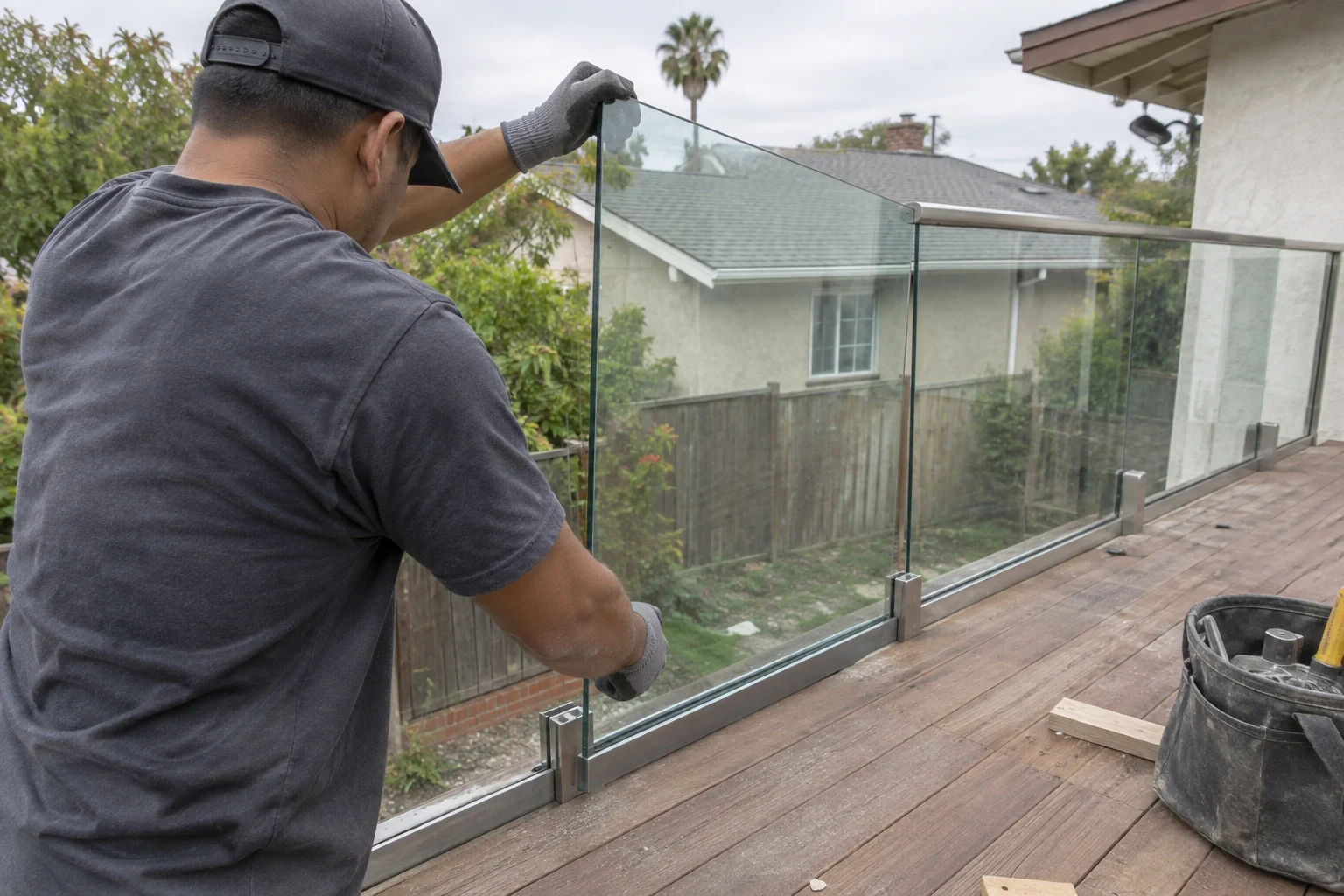
What a Glass Railing Is and When It Makes Sense
Think of it as a code-rated guard where the infill is safety glass, either tempered or laminated, held in place by stainless posts and clamps or by a continuous base shoe anchored into the deck or slab. It takes the place of wood pickets, aluminum balusters or cable that interrupt the view or have begun to rot, corrode or work loose.
Glass is the better choice when your current railing needs replacing anyway and you expect to live in your home for a long stretch. Up front, glass with good stainless costs more than painted wood or powder-coated aluminum. Over the years, though, it never rots, swells or needs a new finish, and that missing upkeep is how the extra cost comes back to you.
Close to the ocean, the hardware deserves as much attention as the glass. Cheaper stainless can develop rust spots after a season or two in salt air, so we pick fittings based on where your home sits. Our installers bring 30 years of window installation experience to the job, which matters when every heavy panel arrives sized to the fraction of an inch and has no room for error.
What the Work Includes
Mounting system selection
We compare top-mounted base shoe, side-mounted fascia shoe and post-and-clamp systems against your deck framing or slab. A base shoe gives the cleanest frameless look. Posts can make more sense on a wood deck with limited blocking.
Glass specification
We specify tempered or laminated tempered glass at the thickness the span and mounting call for, and confirm with the city which type your guard requires. Low-iron glass is available if you want to avoid the green edge tint of standard clear glass.
Marine-grade hardware
We recommend 316 stainless for clamps, posts, cap rails and fasteners. It holds up to salt air far better than 304, which tends to tea-stain and pit near the ocean.
Substrate check and prep
A guard has to resist a 200-pound load at the top rail, so we check the framing or concrete before anything is ordered. That can mean adding blocking under a wood deck or confirming slab depth for anchors.
Removal of the old railing
We take out the existing wood, aluminum or iron railing, patch the anchor holes and haul the debris away.
Signs Your Railing Is Due for Replacement
Posts that move when pushed
A post that flexes at the base usually means rot at the footing or loosened lag bolts. That is a safety problem, not a cosmetic one.
Rust streaks and bubbling paint
Steel and iron railings rust from the inside out once the coating breaks. The streaks on your stucco or deck surface are a sign the metal is already losing thickness.
Constant refinishing
If you are sanding and painting or staining a wood rail every year or two, the upkeep is adding up. Glass and stainless remove that cycle.
A blocked view
Pickets and balusters cut the view into strips at eye level when you are seated. Glass keeps the line of sight open while still meeting guard height.
Gaps that no longer meet code
Older railings often have openings wider than a 4-inch sphere can pass through, which current code does not allow. A glass guard closes those gaps entirely.
How a Glass Railing Project Runs
- 1
In-home estimate
We look over the deck, balcony or stairs, measure the run, check the framing or slab and go through mounting styles and hardware grades with you. The written estimate breaks out glass, hardware and prep as separate lines.
- 2
Final measure and permit
Once tempered glass leaves the factory, no one can trim or re-cut it, so we return for exact final measurements before placing the order. If the project needs a permit, we pull it and book the inspection.
- 3
Installation day
The old railing comes out first, then we add blocking or anchors where needed and set and level the base shoe or posts. The glass panels go in after that, shimmed and locked down, with the cap rail last if your design includes one.
- 4
Walkthrough and cleanup
Together we walk the finished guard, and we show you the right way to clean the glass and the stainless. The old railing, packaging and debris leave with us.
What Moves the Price
Glass railing pricing depends far more on the system and site than on looks alone. We price each line item so you can see where the money goes and decide where spending more pays off over the life of the railing.
- Length and panel count
- Total linear footage drives material, but more short panels with corners and returns add hardware and labor compared with one long straight run.
- Mounting system
- A continuous base shoe uses more aluminum and anchoring than clamps on posts. Fascia mounting on the deck edge adds labor but frees up deck space.
- Glass type and thickness
- Laminated tempered glass costs more than single-ply tempered, and low-iron glass adds to that. Thickness rises with panel height and span.
- Hardware grade
- 316 stainless costs more than 304 at purchase. Close to the coast it usually costs less over time because it avoids the staining and replacement that cheaper hardware brings.
- Structure and stairs
- Added blocking, slab repair or anchoring into older framing adds time. Stair runs need angled panels and fittings, which cost more than level sections.
Glass Railing Questions
Something not covered here? (562) 554-7232
Is a glass railing safe if a panel gets hit hard?
Guard glass is always safety glass. Single-ply tempered glass shatters into small, rounded fragments rather than long, sharp pieces. Laminated tempered glass adds a plastic interlayer that keeps the fragments bonded together, so the panel still acts as a barrier until we swap it out. Many codes now favor laminated glass in guards for that reason.
How much upkeep does a glass railing need?
Mostly cleaning. Salt film and water spots build up on the glass, so a hose rinse and a squeegee every few weeks keeps it clear. Rinse the stainless fittings with fresh water now and then to clear salt deposits. Sanding, staining and painting drop out of the routine entirely.
Do I need a permit for a glass railing?
Many deck and balcony guard replacements do, especially where the walking surface sits more than 30 inches above grade. We find out what the city requires for your project, pull the permit and meet the inspector.
Can glass go on my existing wood deck?
Often it can, but the framing decides. A glass guard concentrates load at the posts or along the base shoe, so we inspect the rim joist and blocking first. Any reinforcement the deck needs shows up as its own line on the estimate before work begins.
Who covers it if something is damaged during the work?
We are bonded and insured. That protection applies to your property from the moment we start taking out the old railing until the last glass panel is set and the site is cleared.
Find Out What a Glass Railing Would Take at Your Home
We measure the run, look at the framing or slab, and lay out glass and hardware choices next to each other with their costs. The visit is free, there is no sales pressure, and you are under no obligation to go ahead.